Park Ave Peptides — Clinical Reference Library — For Professional Use Only

Regenerative & Musculoskeletal Research
cGMP facility · Third-party tested · Cold-chain shipping · 24-hour COA on request
Reference Compound
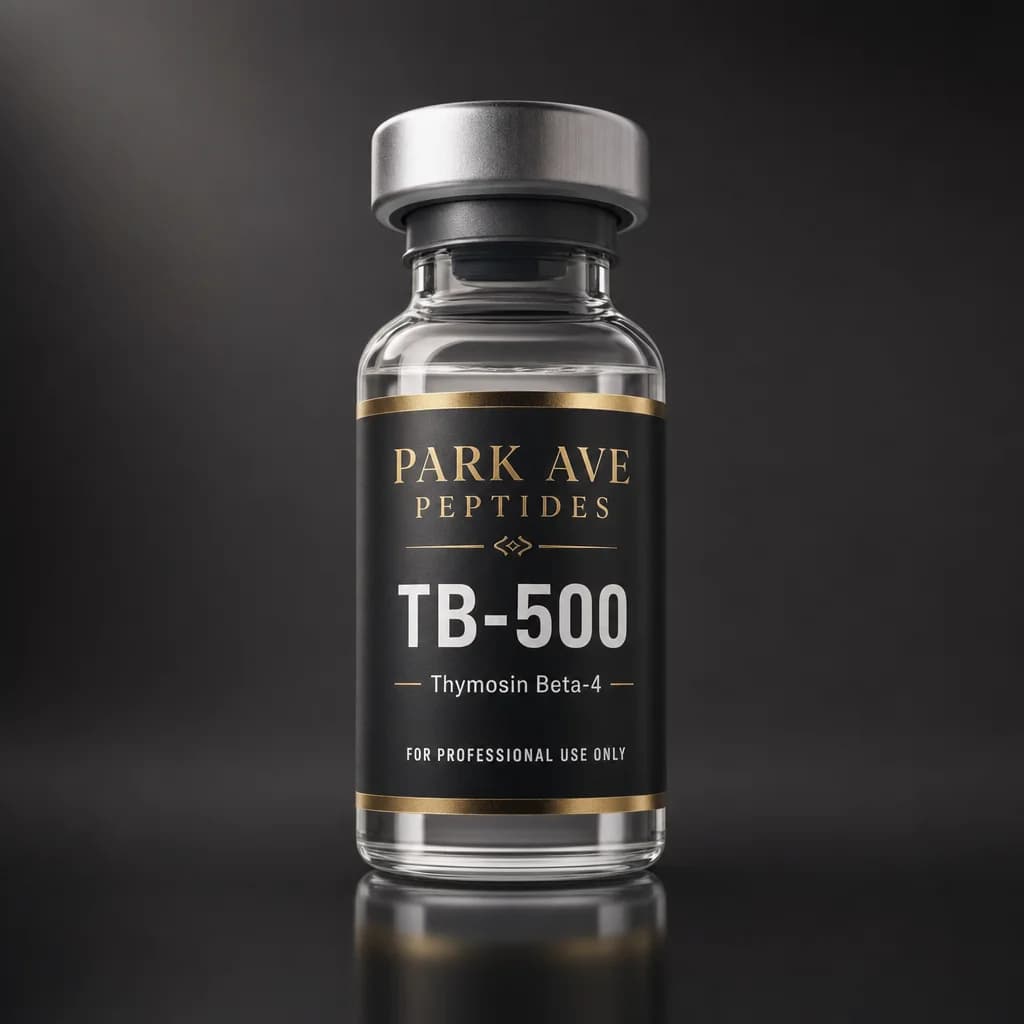
TB-500 is a synthetic version of the active region of Thymosin β4, a naturally occurring 43-amino-acid actin-sequestering peptide. The principal mechanism in the literature is binding to G-actin via the conserved actin-binding motif (KLKKTET), regulating cytoskeletal dynamics and enabling cell migration during tissue repair.
At a Glance
ShowQuality Documentation
Lot PAP-TB500T-240118-A01 — Reference
Field of Medicine — Regenerative & Musculoskeletal Research
Regenerative Medicine and Cardiovascular Research.
TB-500 is a synthetic fragment corresponding to the active region of Thymosin Beta-4 (Tβ4), a 43–amino-acid actin-sequestering peptide naturally abundant in platelets and wound fluid.
Tβ4 binds G-actin to regulate cytoskeletal dynamics, supports cell migration, and upregulates expression of laminin-5, integrins, and angiogenic factors. It has been investigated for roles in cardiac repair, corneal wound healing, and dermal regeneration.
Reference Compound
TB-500 (Thymosin Beta-4)
02 — Science
03 — Pathway
Pathway Summary
TB-500 is a synthetic version of the active region of Thymosin β4, a naturally occurring 43-amino-acid actin-sequestering peptide. The principal mechanism in the literature is binding to G-actin via the conserved actin-binding motif (KLKKTET), regulating cytoskeletal dynamics and enabling cell migration during tissue repair.
Secondary mechanisms include upregulation of laminin-5 and integrin expression supporting endothelial cell migration, suppression of inflammatory cytokines in injury models, and angiogenic effects mediated through pathways overlapping with VEGF signaling.
Like BPC-157, the evidence base is preclinical. Human work to date is limited to early-phase trials in dry-eye and dermal indications conducted with the parent Thymosin β4 sequence rather than TB-500 specifically.
04 — Lab Reference
For licensed research and clinical evaluation only. Not dosing guidance.
Reconstitution
Bacteriostatic water (0.9% benzyl alcohol) or sterile water. Add diluent slowly along the vial wall — do not inject directly onto the lyophilized cake. Swirl gently until fully dissolved.
Storage
Lyophilized: −20°C long term; 2–8°C short term (weeks). Protect from light.Reconstituted: 2–8°C, generally up to 14–28 days depending on compound.
Quality
≥99% purity by HPLC. Identity confirmed by mass spectrometry. Independent third-party verification on every lot. COA available per lot.
Handling notes —Avoid repeated freeze–thaw cycles. Do not shake vigorously after reconstitution.
Need a full protocol brief?
Reconstitution worksheets, concentration reference cards, and sample COA for verified accounts.
05 — Common Questions
TB-500 (Thymosin Beta-4) is presented here as a reference compound for clinicians and researchers. Regulatory status varies by jurisdiction and indication — see the official drug databases (FDA, EMA) for current approval information.
Yes. A lot-specific COA documenting identity and purity by HPLC and mass spectrometry is available on request through the Request Information form.
Each lot is analyzed by reverse-phase HPLC for purity and confirmed by mass spectrometry for identity. Independent third-party laboratory verification is performed on every lot.
Store the lyophilized vial refrigerated for short-term use, or frozen at −20°C for long-term storage. Once reconstituted, refrigerate and protect from light.
06 — Citations
The following sources are representative of the literature describing TB-500 (Thymosin Beta-4). A full annotated citation list with PubMed identifiers is available on request.
See also the glossary of research terms and the full peptide library.
Comparative Reference
See molecular profile, pharmacokinetics, and handling next to related compounds in the same family.
Often Researched Alongside
cGMP facility · Third-party tested · Cold-chain shipping · 24-hour COA on request